The Future of Home Price Appreciation and What It Means for You

The Future of Home Price Appreciation and What It Means for You

The Future of Home Price Appreciation and What It Means for You | Simplifying The Market

Many consumers are wondering what will happen with home values over the next few years. Some are concerned that the recent run-up in home prices will lead to a situation similar to the housing crash 15 years ago.

However, experts say the market is totally different today. For example, Odeta Kushi, Deputy Chief Economist at First American, tweeted just last week on this issue:

“. . . We do need price appreciation to slow today (it’s not sustainable over the long run) but high price growth today is supported by fundamentals- short supply, lower rates & demographic demand. And we are in a much different & safer space: better credit quality, low DTI [Debt-To-Income] & tons of equity. Hence, a crash in prices is very unlikely.”

Price appreciation will slow from the double-digit levels the market has seen over the last two years. However, experts believe home values will not depreciate (where a home would lose value).

To this point, Pulsenomics just released the latest Home Price Expectation Survey – a survey of a national panel of over 100 economists, real estate experts, and investment and market strategists. It forecasts home prices will continue appreciating over the next five years. Below are the expected year-over-year rates of home price appreciation based on the average of all 100+ projections:

  • 2022: 9%
  • 2023: 4.74%
  • 2024: 3.67%
  • 2025: 3.41%
  • 2026: 3.57%

Those responding to the survey believe home price appreciation will still be relatively high this year (though half of what it was last year), and then return to more normal levels over the next four years.

What Does This Mean for You as a Buyer?

With a limited supply of homes available for sale and both prices and mortgage rates increasing, it can be a challenging market to navigate as a buyer. But buying a home sooner rather than later does have its benefits. If you wait to buy, you’ll pay more in the future. However, if you buy now, you’ll actually be in the position to make future price increases work for you. Once you buy, those rising home prices will help you build your home’s value, and by extension, your own household wealth through home equity.

As an example, let’s assume you purchased a $360,000 home in January of this year (the median price according to the National Association of Realtors rounded up to the nearest $10K). If you factor in the forecast for appreciation from the Home Price Expectation Survey, you could accumulate over $96,000 in household wealth over the next five years (see graph below):

The Future of Home Price Appreciation and What It Means for You | Simplifying The Market

Bottom Line

If you’re trying to decide whether to buy now or wait, the key is knowing what’s expected to happen with home prices. Experts say prices will continue to climb in the years ahead, just at a slower pace. So, if you’re ready to buy, doing so now may be your best bet for your wallet. It’ll also give you the chance to use the future home price appreciation to build your own net worth through rising equity. If you want to get started, let’s connect today.

What You Need To Budget for When Buying a Home

What You Need To Budget for When Buying a Home

What You Need To Budget for When Buying a Home | Simplifying The Market

When it comes to buying a home, it can feel a bit intimidating to know how much you need to save and where to find that information. But you should know, you’re not expected to have all the answers yourself. There are many trusted professionals who can help you understand your finances and what you’ll need to budget for throughout the process.

To get you started, here are a few things experts say you should plan for along the way.

1. Down Payment

As you set your savings goal for your purchase, your down payment is likely already top of mind. And, like many other people, you may believe you need to set aside 20% of the home’s purchase price for that down payment – but that’s not always the case. The National Association of Realtors (NAR) says:

One of the biggest misconceptions among housing consumers is what the typical down payment is and what amount is needed to enter homeownership. Having this knowledge is critical to know what to save . . .”

The good news is, you may be able to put as little as 3.5% (or even 0%) down in some situations. To understand your options, partner with a trusted professional who can go over the various loan types, down payment assistance programs, and what each one requires.

2. Earnest Money Deposit

Another item you may want to plan for is an earnest money deposit. While it isn’t required, it’s common in today’s highly competitive market because it can help your offer stand out in a bidding war.

So, what is it? It’s money you pay as a show of good faith when you make an offer on a house. This deposit works like a credit. You’re using some of the money you already saved for your purchase to show the seller you’re committed and serious about their house. It’s not an added expense, it’s just paying some of that up front. First American explains what it is and how it works:

The deposit made from the buyer to the seller when submitting an offer. This deposit is typically held in trust by a third party and is intended to show the seller you are serious about purchasing their home. Upon closing the money will generally be applied to your down payment or closing costs.”

In other words, an earnest money deposit could be the very first check you’ll write toward your purchase. The amount varies by state and situation. Realtor.com elaborates:

The amount you’ll deposit as earnest money will depend on factors such as policies and limitations in your state, the current market, what your real estate agent recommends, and what the seller requires. On average, however, you can expect to hand over 1% to 2% of the total home purchase price.”

Work with a real estate advisor to understand any requirements in your local area and what they’ve recommended for other buyers in your market. They’ll help you determine if it’s something that could be a useful option for you.

3. Closing Costs

The next thing to plan for is your closing costs. The Federal Trade Commission (FTC) defines closing costs as:

The upfront fees charged in connection with a mortgage loan transaction. …generally including, but not limited to a loan origination fee, title examination and insurance, survey, attorney’s fee, and prepaid items, such as escrow deposits for taxes and insurance.”

Basically, your closing costs cover the fees for various people and services involved in your transaction. NAR has this to say about how much to budget for:

“A home costs more than just the sale price. For example, closing costs—which make up about 2% to 5% of the home’s purchase price—are a major added expense…Lenders provide a Closing Disclosure at least three business days prior to closing on a mortgage. But buyers will need to budget for these added costs ahead of time to avoid sticker shock days before closing.”

The key takeaway is savvy buyers plan ahead for these expenses so they can come into the process prepared. Freddie Mac sums it up like this:

“If you’re in the market to buy a home, your down payment is probably top of mind. And rightly so – it’s likely the biggest cost of homebuying. However, it is not the only cost and it’s critical you understand all your expenses before diving in. The more prepared you are for your down payment, closing and other costs, the smoother your homebuying journey will be.”

Bottom Line

Knowing what to budget for in the homebuying process is essential. To make sure you understand these and any other expenses that may come up, let’s connect so you have reliable expertise on what to expect when you buy a home.

Balancing Your Wants and Needs as a Homebuyer Today

Balancing Your Wants and Needs as a Homebuyer Today

Balancing Your Wants and Needs as a Homebuyer Today | Simplifying The Market

Since the number of homes for sale is low today, it can feel challenging to find one that checks all your boxes. But if you know which features are absolutely essential in your next home and which ones are just nice bonuses, you can land a home that fits your needs.

Danielle Hale, Chief Economist for realtor.com, explains it like this:

“Focus on the goal you set out for yourself, like your list of must-haves and nice-to-haves and your budget, . . . Stick to that. Be persistent.”

So how do you go about creating your list of desired features? The first step is to get pre-approved for your mortgage. Pre-approval helps you better understand your budget, and that plays an important role in how you’ll craft your list. After all, you don’t want to fall in love with a home that’s too far out of reach.

Once you have a good grasp of your budget, you can begin to list all the features of a home you would like. Here’s a great way to think about them before you begin:

  • Must-Haves – If a house doesn’t have these features, it won’t work for you and your lifestyle (examples: distance from work or loved ones, number of bedrooms/bathrooms, etc.).
  • Nice-To-Haves – These are features that you’d love to have but can live without. Nice-To-Haves aren’t dealbreakers, but if you find a home that hits all the must-haves and some of the these, it’s a contender (examples: a second home office, garage, etc.).
  • Dream State– This is where you can really think big. Again, these aren’t features you’ll need, but if you find a home in your budget that has all the must-haves, most of the nice-to-haves, and any of these, it’s a clear winner (examples: farmhouse sink, multiple walk-in closets, etc.).

Finally, once you’ve created your list and categorized it in a way that works for you, discuss it with your real estate advisor. They’ll be able to help you refine the list further, coach you through the best way to stick to it, and find a home in your area that meets your needs.

Bottom Line

Crafting your home search checklist may seem like a small task, but it can save you time and money. It’s also one of the keys to being successful in today’s competitive market. Let’s connect so we can work together to find a home that fits your wants and needs.

How an Energy Efficient Home Can Be a Bright Idea [INFOGRAPHIC]

How an Energy Efficient Home Can Be a Bright Idea [INFOGRAPHIC]

How an Energy Efficient Home Can Be a Bright Idea [INFOGRAPHIC] | Simplifying The Market

How an Energy Efficient Home Can Be a Bright Idea [INFOGRAPHIC] | Simplifying The Market

Some Highlights

  • With inflation driving up the cost of everyday items, seeking out an energy-efficient home can be a great way to decrease the expenses you can control.
  • Energy efficiency can help lower your utility bills and possibly even save you money on your taxes. Options to look for include efficient appliances, windows, and solar panels.
  • If you’re planning to buy a home this year, consider energy efficiency in your search. Let’s connect so you can better understand features that can save you money for years to come.
What You Need To Know if You’re Thinking About Building a Home

What You Need To Know if You’re Thinking About Building a Home

What You Need To Know if You’re Thinking About Building a Home | Simplifying The Market

If you’re ready to move up, you may be trying to decide whether you want to buy a home that’s already on the market or build a new one. And since the supply of homes available for sale today is low, you’re willing to consider either avenue. While home builders are doing everything they can to construct more houses and help narrow the supply shortage, they’re also facing delays due to factors outside of their control.

Here’s the latest on some of the key challenges homebuilders are experiencing today and how they could impact your plans to move up. When you know what’s happening in the industry, you can make an informed decision on whether to look for a newly built or an existing home in your home search.

Supply Chain Issues

The first hurdle builders are dealing with is the lack of supply of various building materials. According to a recent article from HousingWire:

. . . Nearly everything needed in the homebuilding process is facing some sort of delay and subsequent price increase.”

The supply issue isn’t just with lumber, even though that’s what’s covered most in the news. The article explains many other supplies are impacted too, including roofing materials, windows, garage doors, siding, and gypsum (which is used in drywall).

The difficulty in getting these items is dragging out timelines for new homes as builders wait on what they need to finish construction. And since materials are in short supply, even when they do get the product, the principle of supply and demand is driving prices up for those goods. HousingWire explains it like this:

When supplies are low, charges inevitably go up, . . . Meanwhile, a lack of availability is causing huge delays, meaning builders are struggling to stay on schedule.”

The National Association of Home Builders (NAHB) agrees:

Builders are grappling with supply-chain issues that are extending construction times and increasing costs.”

Skilled Labor Shortage

But that’s not the only challenge with new home construction today. Builders are also having a hard time finding skilled labor, which means they’re short-handed, further dragging out their timelines. Odeta Kushi, Deputy Chief Economist at First American, says this is an ongoing challenge for the industry:

The skilled labor shortage in the construction industry is not new – it’s been an issue for more than a decade now.”

But there is good news. The February jobs report shows employment gains in the construction industry. Kushi puts this encouraging news into perspective in the article mentioned above:

“Overall this was a good report, . . . The supply of workers continues to fall short of demand, but the underlying momentum of the labor market recovery is strong, and falling COVID case counts provide further forward momentum.”

That means, while finding workers continues to be a challenge for builders, there are signs of positive momentum moving forward.

How This Impacts You

HousingWire explains how these things can impact move-up buyers today:

The residential construction industry is facing a crisis as builders manage the critical shortage of building materials and labor. Explosive supply and labor costs are forcing long delays. . . .” 

So, when you weigh your options and try to decide between building a home or buying an existing one, factor the potential delay in new home construction into your decision. While it doesn’t mean you should cross newly built homes off your list, it does mean you should consider your timeline and if you’re willing to wait while your home is being constructed.

Bottom Line

When planning your next move, understanding the latest market conditions is key to making the best decision possible. To make sure you have all the information you need, let’s connect. Together we can make sure you know what’s happening in our local market so you can confidently decide what’s right for you, your priorities, and your timeline.

Did Your Dream Home Just Come on the Market?

Did Your Dream Home Just Come on the Market?

Did Your Dream Home Just Come on the Market? | Simplifying The Market

For the first time in a long time, the number of newly listed homes is beginning to rise. In their latest monthly release, realtor.com reveals the number of existing homes entering the market has increased for two months in a row (this comes after six months of declines). Here’s a graph showing the monthly new listings going back to January of last year. The green bars indicate the first gains since June.

Did Your Dream Home Just Come on the Market? | Simplifying The Market

However, buying demand is still outpacing housing supply.

Though the increase in homes coming to the market is great news for prospective homebuyers, the number of buyers is still outpacing the number of homes available for sale. As realtor.com explains in their latest report:

“During the final two weeks of the month, more new sellers entered the market than during the same time last year. . . . However, with 5.8 million new homes missing from the market and millions of millennials at first-time buying ages, housing supply faces a long road to catching up with demand.

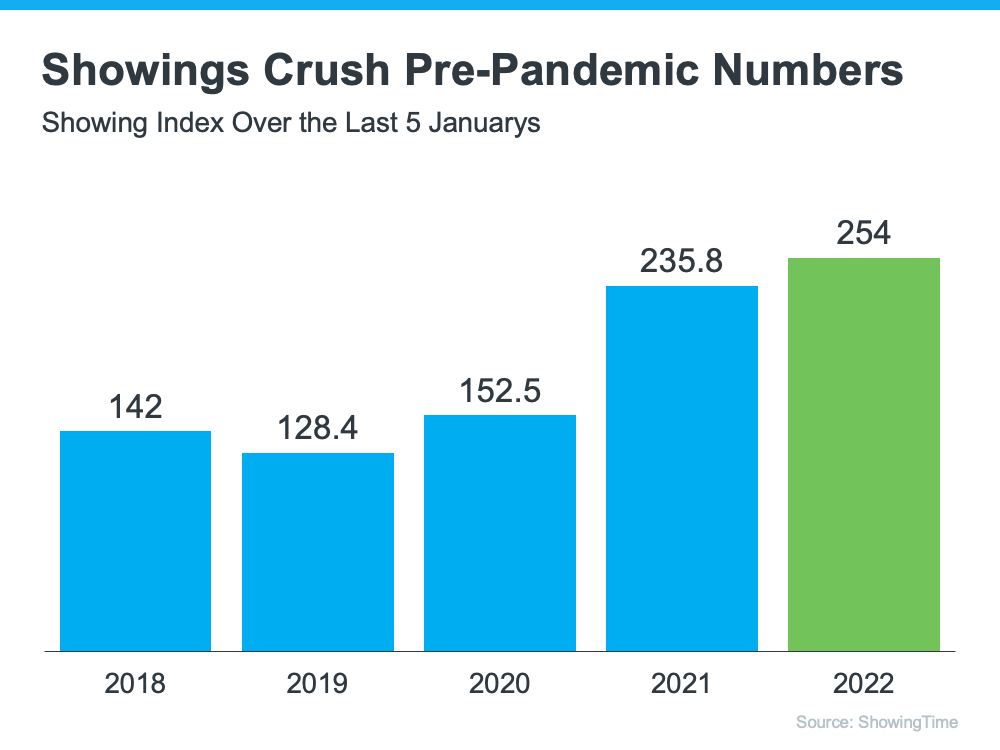
In fact, according to the latest ShowingTime Showing Index, which tracks the average number of appointments received on active listings during the month, buyer demand was greater this January than any other January in the last five years (see graph below):

Did Your Dream Home Just Come on the Market? | Simplifying The Market

This prompted ShowingTime to say:

“The latest data from ShowingTime . . . shows a surge in home buyer demand in January. . . . This enormous activity occurred in a month when buyer activity typically slows and followed a historic 2021, where buyer demand across the country was extraordinarily strong.”

What does that mean for you?

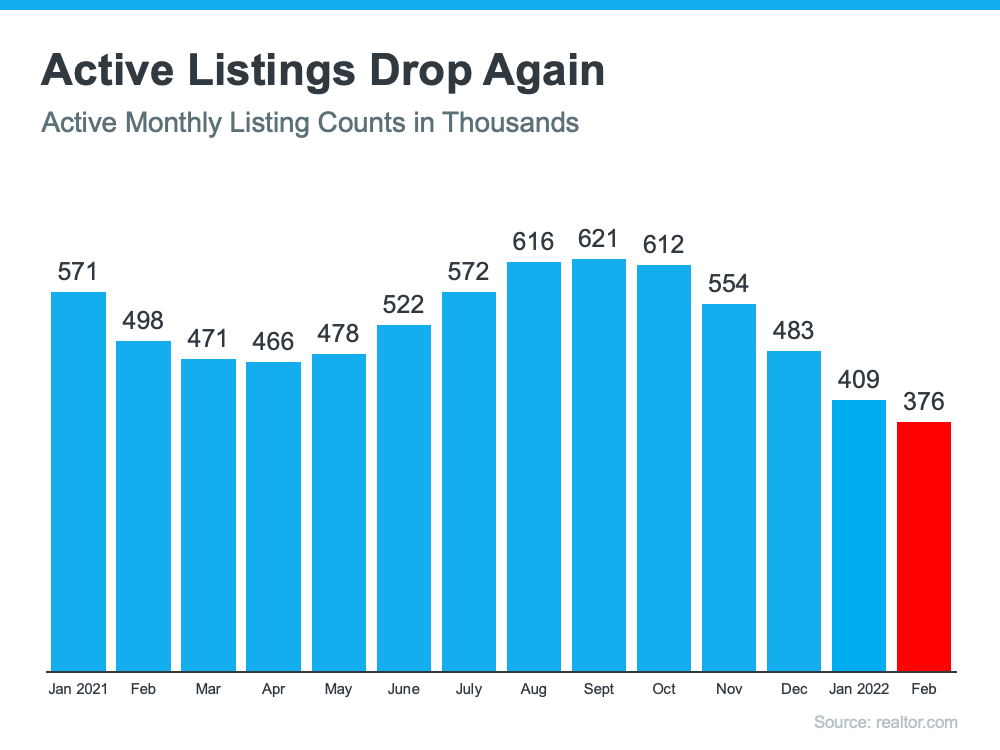
Basically, as homes come to the market, they are quickly being purchased by eagerly awaiting buyers. So even though the number of newly listed homes is increasing, the number of active listings is still shrinking every month because buyers are purchasing homes almost as soon as they come up for sale. That means listings are coming on and off the market so fast that they don’t carry over to be counted in the active listing numbers the following month. Here’s a graph showing the number of active listings each month since last January using data released by realtor.com:

Did Your Dream Home Just Come on the Market? | Simplifying The Market

This graph shows that the number of active listings has decreased for each of the last five months even though the number of newly listed homes has increased over the last two months.

Bottom Line

Whether you’re looking to upgrade to a home that will better suit your lifestyle or looking to purchase your first house, let’s connect so you can stay updated on what’s happening in your area. And be prepared to move immediately if a home fitting your needs hits the market. Your dream home may be one of those new listings that just became available, but if you don’t act quickly, it could be gone tomorrow.

Pin It on Pinterest