What Would a Recession Mean for the Housing Market?

What Would a Recession Mean for the Housing Market?
What Would a Recession Mean for the Housing Market? | Simplifying The Market

According to a recent survey from the Wall Street Journal, the percentage of economists who believe we’ll see a recession in the next 12 months is growing. When surveyed in July 2021, only 12% of economists consulted thought there’d be a recession by now. But this July, when polled, 49% believe we will see a recession in the coming 12 months.

And as more recession talk fills the air, one concern many people have is: should I delay my homeownership plans if there’s a recession?

Here’s a look at historical data to show what happened in real estate during previous recessions to help prove why you shouldn’t be afraid of what a recession would mean for the housing market today.

A Recession Doesn’t Mean Falling Home Prices

To show that home prices don’t fall every time there’s a recession, it helps to turn to historical data. As the graph below illustrates, looking at the recessions going all the way back to 1980, home prices appreciated in four of the last six recessions. So, historically, when the economy slows down, it doesn’t mean home values will fall.

What Would a Recession Mean for the Housing Market? | Simplifying The Market

Most people remember the housing crisis in 2008 (the larger of the two red bars in the graph above) and think another recession would repeat what happened then. But this housing market isn’t about to crash. The fundamentals are very different today than they were in 2008. So, don’t assume we’re heading down the same path.

A Recession Means Falling Mortgage Rates

Research also helps paint the picture of how a recession could impact the cost of financing a home. As the chart below shows, historically, each time the economy slowed down, mortgage rates decreased.

What Would a Recession Mean for the Housing Market? | Simplifying The Market

Fortune explains that mortgage rates typically fall during an economic slowdown:

Over the past five recessions, mortgage rates have fallen an average of 1.8 percentage points from the peak seen during the recession to the trough. And in many cases, they continued to fall after the fact as it takes some time to turn things around even when the recession is technically over.”

And while history doesn’t always repeat itself, we can learn from and find comfort in the historical data.

Bottom Line

There’s no doubt everyone remembers what happened in the housing market in 2008. But you don’t need to fear the word recession if you’re planning to buy or sell a home. According to historical data, in most recessions, home price gains have stayed strong, and mortgage rates have declined.

If you’re thinking about buying or selling a home, let’s connect so you have expert advice on what’s happening in the housing market and what that means for your homeownership goals.

Why Experts Say the Housing Market Won’t Crash [INFOGRAPHIC]

Why Experts Say the Housing Market Won’t Crash [INFOGRAPHIC]

Why Experts Say the Housing Market Won’t Crash [INFOGRAPHIC] | Simplifying The Market

Why Experts Say the Housing Market Won’t Crash [INFOGRAPHIC] | Simplifying The Market

Some Highlights

What Does the Rest of the Year Hold for Home Prices?

What Does the Rest of the Year Hold for Home Prices?

What Does the Rest of the Year Hold for Home Prices? | Simplifying The Market

Whether you’re a potential homebuyer, seller, or both, you probably want to know: will home prices fall this year? Let’s break down what’s happening with home prices, where experts say they’re headed, and why this matters for your homeownership goals.

Last Year’s Rapid Home Price Growth Wasn’t the Norm

In 2021, home prices appreciated quickly. One reason why is that record-low mortgage rates motivated more buyers to enter the market. As a result, there were more people looking to make a purchase than there were homes available for sale. That led to competitive bidding wars which drove prices up. CoreLogic helps explain how unusual last year’s appreciation was:

Price appreciation averaged 15% for the full year of 2021, up from the 2020 full year average of 6%.”

In other words, the pace of appreciation in 2021 far surpassed the 6% the market saw in 2020. And even that appreciation was greater than the pre-pandemic norm which was typically around 3.8%. This goes to show, 2021 was an anomaly in the housing market spurred by more buyers than homes for sale.

Home Price Appreciation Moderates Today

This year, home price appreciation is slowing (or decelerating) from the feverish pace the market saw over the past two years. According to the latest forecasts, experts say on average, nationwide, prices will still appreciate by roughly 10% in 2022 (see graph below):

What Does the Rest of the Year Hold for Home Prices? | Simplifying The Market

Why do all of these experts agree prices will stay continue to rise? It’s simple. Even though housing supply is growing today, it’s still low overall thanks to several factors, including a long period of underbuilding homes. And experts say that’s going to help keep upward pressure on home prices this year. Additionally, since mortgage rates are higher this year than they were last year, buyer demand has slowed.

As the market undergoes this change, it’s true price appreciation this year won’t match the feverish pace in 2021. But the rapid appreciation the market saw last year wasn’t sustainable anyway.

What Does That Mean for You?

Today, the market is beginning to move back toward pre-pandemic levels. But even the forecast for 10% home price growth in 2022 is well beyond the 3.8% that’s more typical for a normal market.

So, despite what you may have heard, experts say home prices won’t fall in most markets. They’ll just appreciate more moderately.

If you’re worried the house you’re trying to sell or the home you want to buy will decrease in value, you should know experts aren’t calling for depreciation in most markets, just deceleration. That means your home should still grow in value, just not as fast as it did last year.

Bottom Line

If you’re thinking of making a move, you shouldn’t wait for prices to fall. Experts say nationally, prices will continue to appreciate this year, just at a more moderate pace. When you’re ready to begin the process of buying or selling, let’s connect so you have a local market expert on your side each step of the way.

Selling Your House? Your Asking Price Matters More Now Than Ever

Selling Your House? Your Asking Price Matters More Now Than Ever

Selling Your House? Your Asking Price Matters More Now Than Ever | Simplifying The Market

There’s no doubt about the fact that the housing market is slowing from the frenzy we saw over the past two years. But what does that mean for you if you’re thinking of selling your house?

While home prices are still appreciating in most markets and experts say that will continue, they’re climbing at a slower pace because rising mortgage rates are creating less buyer demand. Because of this, there are more homes on the market. And in a shift like this one, the way you price your home matters more than ever.

Why Today’s Housing Market Is Different

During the pandemic, sellers could price their homes higher because demand was so high, and supply was so low. This year, things are shifting, and that means your approach to pricing your house needs to shift too.

Because we’re seeing less buyer demand, sellers have to recognize this is a different market than it was during the pandemic. Here’s what’s at stake if you don’t.

Why Pricing Your House at Market Value Matters

The price you set for your house sends a message to potential buyers. If you price it too high, you run the risk of deterring buyers.

When that happens, you may have to lower the price to try to reignite interest in your house when it sits on the market for a while. But be aware that a price drop can be seen as a red flag for some buyers who will wonder what that means about the home or if in fact it’s still overpriced. Some sellers aren’t adjusting their expectations to today’s market, and realtor.com explains the impact that’s having:

“. . . the share of listings with a price cut was nearly double its year ago level even as it remains well below pre-pandemic levels.”

To avoid the headache of having to lower your price, you’ll want to price it right from the onset. A real estate advisor knows how to determine that perfect asking price. To find the right price, they balance the value of homes in your neighborhood, current market trends and buyer demand, the condition of your house, and more.

Not to mention, pricing your house fairly based on market conditions increases the chance you’ll have more buyers who are interested in purchasing it. This helps lead to stronger offers and a greater likelihood it’ll sell quickly.

Why You Still Have an Opportunity When You Sell Today

Rest assured, it’s still a sellers’ market, and you’ll still get great benefits if you plan accordingly and work with an agent to set your price at the current market value. As Lawrence Yun, Chief Economist at the National Association of Realtors (NAR), says:

Homes priced right are selling very quickly, but homes priced too high are deterring prospective buyers.”

Mike Simonsen, the Founder and CEO of Altos Research, also notes:

“We can see that demand is still there for the homes that are priced properly.”

Bottom Line

Home priced right are selling quickly in today’s real estate market. Let’s connect to make sure you price your house based on current market conditions so you can maximize your sales potential and minimize your hassle in a shifting market.

Why It’s Still a Sellers’ Market

Why It’s Still a Sellers’ Market

Why It’s Still a Sellers’ Market | Simplifying The Market

As there’s more and more talk about the real estate market cooling off from the peak frenzy it saw during the pandemic, you may be questioning what that means for your plans to sell your house. If you’re thinking of making a move, you should know the market is still anything but normal.

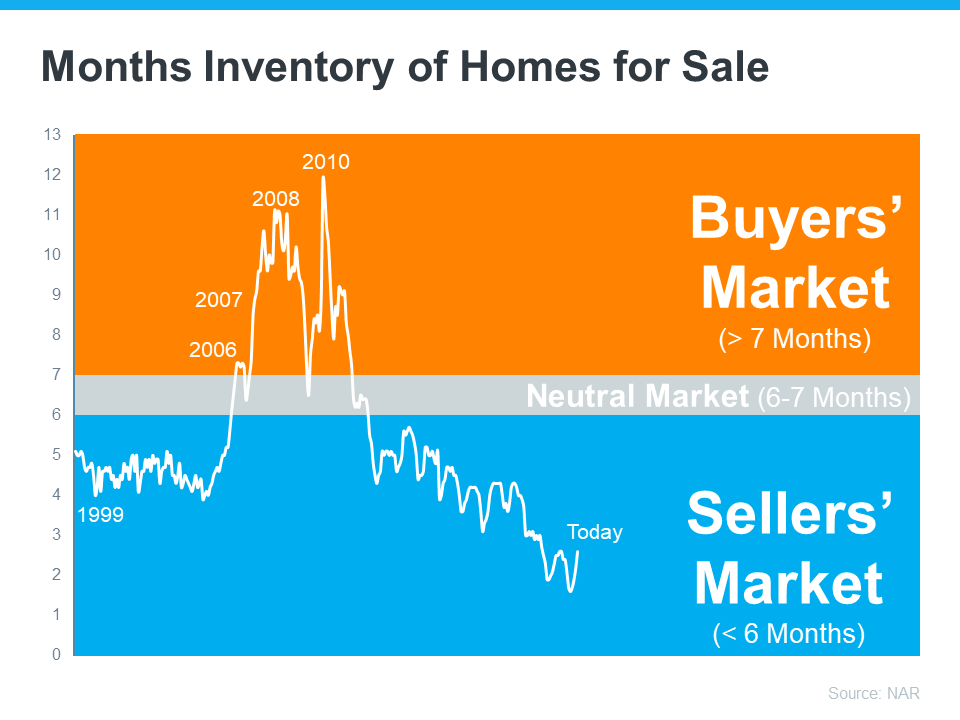
Even though the supply of homes for sale has been growing this year, there’s still a shortage of homes on the market. And that means conditions continue to favor sellers today. That’s because the level of inventory of homes for sale can help determine if buyers or sellers are in the driver’s seat. Think of it like this:

  • A buyers’ market is when there are more homes for sale than buyers looking to buy. When that happens, buyers have the negotiation power because sellers are more willing to compromise so they can sell their house.
  • In a sellers’ market, it’s just the opposite. There are too few homes available for the number of buyers in the market and that gives the seller all the leverage. In that situation, buyers will do what they can to compete for the limited number of homes for sale.
  • A neutral market is when supply is balanced and there are enough homes to meet buyer demand at the current sales pace.

And for the past two years, we’ve been in a red-hot sellers’ market because inventory has been near record lows. The blue section of this graph highlights just how far below a neutral market inventory still is today.

Why It’s Still a Sellers’ Market | Simplifying The Market

What Does This Mean for You?

Ed Pinto, Director of the American Enterprise Institute’s Housing Center, gives a perfect summary of what’s happening in today’s market, saying:

“Overall, the best summary is that we’ll move from a gangbuster sellers’ market to a modest sellers’ market.”

Conditions are still in your favor even though the market is cooling. If you work with an agent to price your house at market value, you’ll find success when you sell your house today. While buyer demand is softening due to higher mortgage rates, homes that are priced right are still selling fast. That means your window of opportunity to list your house hasn’t closed.

Bottom Line

Today’s housing market still favors sellers. If you’re ready to sell your house, let’s connect so you can start making your moves.

Pin It on Pinterest