Young couple on vacation in countryside, they enjoy in summer nature. sitting on porch next to the fireplace, drinking coffee and have romantic sunset
Sometimes it can feel like everyone has advice when it comes to buying a home. While your friends and loved ones may have your best interests in mind, they may also be missing crucial information about today’s housing market that you need to make your best decision.
Before you decide whether you’re ready to buy a home, you should know how to answer these three questions.
1. What’s Going on with Home Prices?
Home prices are one factor that directly impacts how much it will cost to buy a home and how much you stand to gain as a homeowner when prices appreciate.
The graph below shows just how much experts are forecasting prices to rise this year:Continued price appreciation is great news for existing homeowners but can pose a significant challenge if you wait to buy. Using these forecasts, you can determine just how much waiting could cost you. If prices increase based on the average of all forecasts (12.46%), a median-priced home that cost $350,000 in January of 2021 will cost an additional $43,610 by the end of the year. What does this mean for you? Put simply, with home prices increasing, the longer you wait, the more it could cost you.
2. Are Today’s Low Mortgage Rates Going To Last?
Another significant factor that should inform your decision is mortgage interest rates. Today’s average rates remain close to record-lows. Much like prices, though, experts forecast rates will rise over the coming months, as the chart below shows:Your monthly mortgage payment can be significantly impacted by even the slightest increase in mortgage rates, which makes the overall cost of the home greater over time when you wait.
3. Why Is Homeownership Important to You?
The final question is a personal one. Before deciding, you’ll need to understand your motivation to buy a home and why homeownership is an important goal for you. The financial benefits of owning a home are often easier to account for than the many emotional ones.
The 2021 National Homeownership Market Survey shows that six of the nine reasons Americans value homeownership are because of how it impacts them on a personal, aspirational level. The survey says homeownership provides:
Stability
Safety
A Sense of Accomplishment
A Life Milestone
A Stake in the Community
Personal Pride
The National Housing & Financial Capability Survey from NeighborWorks America also highlights the emotional benefits of homeownership:Clearly, there’s a value to homeownership beyond the many great financial opportunities it provides. It gives homeowners a sense of pride, safety, security, and accomplishment – which impacts their lives and how they feel daily.
Bottom Line
Homeownership is life-changing, and buying a home can positively impact you in so many ways. With any decision this big, it helps to have a trusted advisor by your side each step of the way. If you’re ready to begin your journey toward homeownership, let’s connect to discuss your options and begin your journey.
If you’re thinking of buying a home but wondering if waiting a few years will save you in the long run, think again.
The longer the wait, the more you’ll pay, especially when mortgage rates and home prices rise. Even the slightest change in the mortgage rate can have a big impact on your buying power no matter your price point.
Don’t assume waiting will save you money. Let’s connect to set the ball into motion today while mortgage rates are hovering near historic lows.
Happy mid adult African American soldier picks up his preschool age daughter as he returns home from assignment.
Some veterans are finding it difficult to obtain a home in today’s market. According to the National Association of Realtors (NAR):
“Conventional conforming mortgages (mortgages that conform to guidelines set by Fannie Mae and Freddie Mac), accounted for 74% of mortgages obtained by homebuyers in May 2021, an increase from about 65% during 2018 through 2019…The share of VA-guaranteed loanshas also decreased to 7% in May 2021 from about 10% in past years.”
Recent data in the latest Origination Insight Report from Ellie Mae sheds light on the continuation of this trend. Below, we can see just how small of a share of total financing VA loans made up in June of 2021, according to that Ellie Mae report:The drop in VA loan usage can be attributed to the difficulties veterans continue to face when buying a home. The NAR article elaborates:
“It is extremely difficult for FHA/VA buyers to get accepted in a multiple offer situation. They are on the bottom of the hierarchy.”
One contributing factor is that buyers with VA loans can’t waive certain contingencies. However, just because a certain contingency must be present for a particular buyer doesn’t mean that buyer’s offer shouldn’t be considered.
What Should Sellers Do To Help Create a Level Playing Field?
As a seller, it’s important to consider every offer in front of you regardless of loan type. If you’re selecting an offer because some contingencies are waived, keep in mind that it doesn’t always mean the offer is what’s best for you.
Buyers who can’t waive specific contingencies may adjust other terms in their offer to make it more appealing to sellers. This may depend on several factors, including their loan type and location, but a motivated buyer and their agent will do everything they can to present an offer that’s as appealing to you as possible.
Ultimately, you should make sure you take time to really understand the terms of their offer and see the big picture. Working with a driven buyer who’s motivated to purchase your house may provide a better opportunity for you to reach your overall best option and what’s most important to you.
Bottom Line
If you’re ready to sell, let’s connect. Together, we can make sure you understand the terms of all offers so you can give each one fair consideration, including those buyers using a VA loan. Our veterans sacrifice so much for our country. They’ve earned our gratitude and should have the same opportunity to obtain the home of their dreams.
One of the hottest topics of conversation in today’s real estate market is the shortage of available homes. Simply put, there are many more potential buyers than there are homes for sale. As a seller, you’ve likely heard that low supply is good news for you. It means your house will get more attention, and likely, more offers. But as life begins to return to normal, you may be wondering if that’s something that will change.
While it may be tempting to blame the pandemic for the current inventory shortage, the pandemic can’t take all the credit. While it did make some sellers hold off on listing their houses over the past year, the truth is the low supply of homes was years in the making. Let’s take a look at the root cause and what the future holds to uncover why now is still a great time to sell.
Where Did the Shortage Come From?
It’s not just today’s high buyer demand. Our low supply goes hand-in-hand with the number of new homes built over the past decades. According to Sam Khater, VP and Chief Economist at Freddie Mac:
“The main driver of the housing shortfall has been the long-term decline in the construction of single-family homes.”
Data in a recent report from the National Association of Realtors (NAR) tells the same story. New home construction has been lagging behind the norm for quite some time. Historically, builders completed an average of 1.5 million new housing units per year. However, since the housing bubble in 2008, the level of new home construction has fallen off (see graph below):The same NAR report elaborates on the impact of this below-average pace of construction:
“. . . the underbuilding gap in the U.S. totaled more than 5.5 million housing units in the last 20 years.”
“Looking ahead, in order to fill an underbuilding gap of approximately 5.5 million housing units during the next 10 years, while accounting for historical growth, new construction would need to accelerate to a pace that is well above the current trend, to more than 2 million housing units per year. . . .”
That means if we buildeven more new houses than the norm every year, it’ll still take a decade to close the underbuilding gap contributing to today’s supply-and-demand mix. Does that mean today’s ultimate sellers’ market is here to stay?
We’re already starting to see an increase in new home construction, which is great news. But newly built homes can’t bridge the supply gap we’re facing right now on their own. In the State of the Nation’s Housing 2021 Report, the Joint Center for Housing Studies of Harvard University (JCHS) says:
“…Although part of the answer to the nation’s housing shortage, new construction can only do so much to ease short-term supply constraints.To meet today’s strong demand, more existing single-family homes must come on the market.”
Early Indicators Show More Existing-Home Inventory Is on Its Way
When we look at existing homes, the latest reports signal that housing supply is growing gradually month-over-month. This uptick in existing homes for sale shows things are beginning to shift. Based on recent data, Odeta Kushi, Deputy Chief Economist at First American, has this to say:
“It looks like existing inventory is starting to inch up, which is good news for a housing market parched for more supply.”
“As the inventory is beginning to pick up ever so modestly, we are still facing a housing shortage, but we may have turned a corner.”
So, what does all of this mean for you? Just because life is starting to return to normal, it doesn’t mean you missed out on the best time to sell. It’s not too late to take advantage of today’s sellers’ market and use rising equity and low interest rates to make your next move.
Bottom Line
It’s still a great time to sell. Even though housing supply is starting to trend up, it’s still hovering near historic lows. Let’s connect to discuss how you can list your house now and use the inventory shortage to get the best possible terms for you.
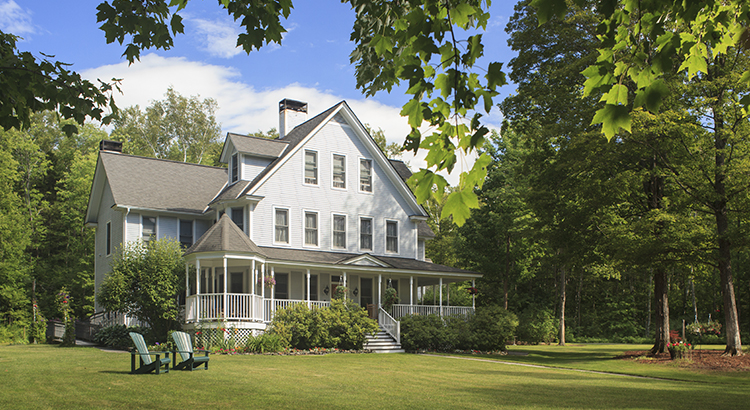
Victorian farmhouse home with lawn and large front porch in summer, Maple Leaf Inn, Barnard,Vermont, USA
Over the past year, many homeowners realized what they need in a home is changing, especially with the rise in remote work. If you’re longing for a dedicated home office or a change in scenery, now may be the time to find the home that addresses your evolving needs.
Working from Home Isn’t a Passing Fad
Before the pandemic, only 21% of individuals worked from home. However, if you’ve recently discovered remote work is your new normal, you’re not alone.
A survey of hiring managers conducted by Statista and Upwork projects 37.5% of U.S. workers will work remotely in some capacity over the next 5 years (see chart below):
Working from Home Gives You More Flexibility and More Options
If you fall in that category, working from home may provide you with opportunities you didn’t realize you had. The ongoing rise in remote work means a portion of the workforce no longer needs to be tied to a specific area for their job. Instead, it gives those workers more flexibility when it comes to where they can live.
If you’re one of the nearly 23% of workers who will remain 100% remote, you have the option to move to a lower cost-of-living area or to the location of your dreams. If you search for a home in a more affordable area, you’ll be able to get more house for your money, freeing up more options for your dedicated office space and more breathing room. You could also move to an area you’ve always dreamed of vacationing in – somewhere near the beach, the mountains, or simply an area that features better weather and community amenities. Without your job tying you to a specific location, you’re bound to find your ideal spot.
If you’re one of the almost 15% of individuals who will havea partially remote or hybridschedule, relocating within your local area to a home that’s further away from your office could be a great choice. Since you won’t be going into work every day, a slightly longer commute from a more suburban or rural area could be a worthy trade-off for a home with more features, space, or comforts. After all, if you’ll still be at home part-time, why not find a home that better suits your needs?
According to the latest Top Ten Issues Affecting Real Estate from TheCounselors of Real Estate (CRE), many homebuyers are already taking advantage of their newfound flexibility:
“. . . after years of apparent but variant trends towards urbanization, the pandemic universally caused a movement away from urban cores,particularly for those with higher incomes who could afford to move and for lower-income individuals seeking lower costs of living.”
Bottom Line
If you’ve found what you’re looking for in a home has changed due to remote work, it may be time to make a move. Let’s connect today to start prioritizing your home needs.
In today’s real estate market, mortgage interest rates are near record lows. If you’ve been in your current home for several years and haven’t refinanced lately, there’s a good chance you have a mortgage with an interest rate higher than today’s average. Here are some options you should consider if you want to take advantage of today’s current low rates before they rise.
Sell and Move Up (or Downsize)
Many of today’s homeowners are rethinking what they need in a home and redefining what their dream home means. For some, continued remote work is bringing about the need for additional space. For others, moving to a lower cost-of-living area or downsizing may be great options. If you’re considering either of these, there may not be a better time to move. Here’s why.
The chart below shows average mortgage rates by decade compared to where they are today:Today’s rates are below 3%, but experts forecast rates to rise over the next few years.
If the interest rate on your current mortgage is higher than today’s average, take advantage of this opportunity by making a move and securing a lower rate. Lower rates mean you may be able to get more house for your money and still have a lower monthly mortgage payment than you might expect.
Waiting, however, might mean you miss out on this historic opportunity. Below is a chart showing how your monthly payment will change if you buy a home as mortgage rates increase:
Breaking It All Down:
Using the chart above, let’s look at the breakdown of a $300,000 mortgage:
When mortgage rates rise, so does the monthly payment you can secure.
Even the smallest increase in rates can make a difference in your monthly mortgage payment.
As interest rates rise, you’ll need to look at a lower-priced home to try and keep the same target monthly payment, meaning you may end up with less home for your money.
No matter what, whether you’re looking to make a move up or downsize to a home that better suits your needs, now is the time. Even a small change in interest rates can have a big impact on your purchasing power.
Refinance
If making a move right now still doesn’t feel right for you, consider refinancing. With the current low mortgage rates, refinancing is a great option if you’re looking to lower your monthly payments and stay in your current home.
Bottom Line
Take advantage of today’s low rates before they begin to rise. Whether you’re thinking about moving up, downsizing, or refinancing, let’s connect today to discuss which option is best for you.





![Waiting To Buy a Home Could Cost You [INFOGRAPHIC]](https://housingcoach.com/wp-content/uploads/2021/10/waiting-can-cost.png)
![Waiting To Buy a Home Could Cost You [INFOGRAPHIC] | MyKCM](https://files.mykcm.com/2021/07/29150353/20210723-MEM-1-1046x2403.png)