How Much Do You Know About Down Payments?

How Much Do You Know About Down Payments?

How Much Do You Know About Down Payments? | Simplifying The Market

Whether you’ve owned a home before, or you’re ready to jump into homeownership for the first time, there are always a lot of questions swirling around about what is truly required for a down payment, and how to best source down payment assistance. Let’s tackle these two today.

1. How much do you really need for a down payment?

There is a long-standing misconception about down payment requirements. A survey from Fannie Mae shows only 17% of consumers know the minimum options are actually between 1 – 5% of the purchase price and 40% don’t know how much they need at all.How Much Do You Know About Down Payments? | Simplifying The MarketThere are many mortgage loans available that require as little as 3% down for first-time buyers, and some ask for only 3.5% down from repeat buyers. There are even loans available for Veterans that provide 0% down payment options too.

We’ve mentioned recently that you don’t need to come up with a 20% down payment to buy, and we’ve also shared how quickly you can save for a 3% or 10% down payment, depending on where you live. If you’re planning to put down just 3%, the research shows it may be possible in most states to have enough saved for a down payment in less than a year. That puts homeownership in a much closer reach for many potential buyers, maybe even you!

2. How can I get help with my down payment?

Regardless of the loans available, many buyers still need assistance with a down payment. The great news is, there are a lot of ways to tap into down payment assistance options. Here are just a couple of them:

Assistance from Family Members

The National Association of Realtors (NAR) said, “a third of recent first-time buyers received down payment assistance from family members.” They also mentioned, “the average net worth of those aged 75 and over stands at $264,800…They just might offer the boost the next generation needs to become homeowners.

That means one of the ways to find help with a down payment is to accept a gift from a family member. If this is an option for you, make sure you talk to your loan officer before you accept the money, to ensure you document the process the way it is required by your loan. This way, it will be received properly and you can still potentially qualify.

Down Payment Assistance Programs

The reality is, not everyone has a loved one or a family member who can provide help with a down payment. There are, however, more than 2,500 down payment assistance programs available (by local areas like city, county, or neighborhood), and some of them are even specifically for first-time buyers.

The gap, as mentioned in the same survey, is “only 23% of consumers are familiar with low down payment programs.”

That’s why it is so important to get familiar with these options by doing your homework before you plan to buy a home. Determine what is available in the area where you ultimately want to live, so you have all the details you need to take advantage of the down payment assistance option that is best for your family.

Bottom Line

If buying a home is one of your long-term goals, you may be able to get there sooner than you think by tapping into one of the many down payment assistance programs available.

How Much Do You Know About Down Payments?

How Much Do You Know About Down Payments?

How Much Do You Know About Down Payments? | Simplifying The Market

Whether you’ve owned a home before, or you’re ready to jump into homeownership for the first time, there are always a lot of questions swirling around about what is truly required for a down payment, and how to best source down payment assistance. Let’s tackle these two today.

1. How much do you really need for a down payment?

There is a long-standing misconception about down payment requirements. A survey from Fannie Mae shows only 17% of consumers know the minimum options are actually between 1 – 5% of the purchase price and 40% don’t know how much they need at all.How Much Do You Know About Down Payments? | Simplifying The MarketThere are many mortgage loans available that require as little as 3% down for first-time buyers, and some ask for only 3.5% down from repeat buyers. There are even loans available for Veterans that provide 0% down payment options too.

We’ve mentioned recently that you don’t need to come up with a 20% down payment to buy, and we’ve also shared how quickly you can save for a 3% or 10% down payment, depending on where you live. If you’re planning to put down just 3%, the research shows it may be possible in most states to have enough saved for a down payment in less than a year. That puts homeownership in a much closer reach for many potential buyers, maybe even you!

2. How can I get help with my down payment?

Regardless of the loans available, many buyers still need assistance with a down payment. The great news is, there are a lot of ways to tap into down payment assistance options. Here are just a couple of them:

Assistance from Family Members

The National Association of Realtors (NAR) said, “a third of recent first-time buyers received down payment assistance from family members.” They also mentioned, “the average net worth of those aged 75 and over stands at $264,800…They just might offer the boost the next generation needs to become homeowners.

That means one of the ways to find help with a down payment is to accept a gift from a family member. If this is an option for you, make sure you talk to your loan officer before you accept the money, to ensure you document the process the way it is required by your loan. This way, it will be received properly and you can still potentially qualify.

Down Payment Assistance Programs

The reality is, not everyone has a loved one or a family member who can provide help with a down payment. There are, however, more than 2,500 down payment assistance programs available (by local areas like city, county, or neighborhood), and some of them are even specifically for first-time buyers.

The gap, as mentioned in the same survey, is “only 23% of consumers are familiar with low down payment programs.”

That’s why it is so important to get familiar with these options by doing your homework before you plan to buy a home. Determine what is available in the area where you ultimately want to live, so you have all the details you need to take advantage of the down payment assistance option that is best for your family.

Bottom Line

If buying a home is one of your long-term goals, you may be able to get there sooner than you think by tapping into one of the many down payment assistance programs available.

Millionaire to Millennials: The Costly Mistake of Not Buying Now

Millionaire to Millennials: The Costly Mistake of Not Buying Now

Millionaire to Millennials: The Costly Mistake of Not Buying Now | Simplifying The Market

On his personal website, self-made millionaire David Bach makes a striking statement:

 “Not prioritizing homeownership is the single biggest mistake millennials are making.” 

He further stated, “Buying a home is an escalator to wealth.”

Bach explains:

“Young adults in particular aren’t hopping on this escalator, and it’s a costly mistake…If millennials don’t buy a home, their chances of actually having any wealth in this country are little to none.”

He then elaborates on the game of homeownership:

“Start by crunching the numbers…actually do the math…This way, you’re really clear on your goals and you won’t just say to yourself, ‘I’ll never afford this!’

A good rule of thumb is to make sure your total monthly housing payment doesn’t consume more than 30 percent of your take-home pay.”

Bach concludes by saying,

“Oftentimes, buying your first home means you’re not buying your dream home…You’re just getting into the market.”

Bottom Line

Whenever a well-respected millionaire gives investment advice, listeners usually clamor to hear it. This millionaire shares some simple and straightforward insights: “The fact is, you aren’t really in the game of building wealth until you own some real estate.”

Who is David Bach?

Bach is a self-made millionaire who has written nine consecutive New York Times bestsellers. His book, “The Automatic Millionaire,” spent 31 weeks on the New York Times bestseller list. He is one of the only business authors in history to have four books simultaneously on the New York Times, Wall Street Journal, BusinessWeek, and USA Today bestseller lists.

He has been a contributor to NBC’s Today Show, appearing more than 100 times, as well as a regular on ABC, CBS, Fox, CNBC, CNN, Yahoo, The View, and PBS. He has also been profiled in many major publications, including the New York Times, BusinessWeek, USA Today, People, Reader’s Digest, Time, Financial Times, Washington Post, Wall Street Journal, Working Woman, Glamour, Family Circle, Redbook, Huffington Post, Business Insider, Investors’ Business Daily, and Forbes.

Existing Home Sales Point Toward a Good Time to Sell [INFOGRAPHIC]

Existing Home Sales Point Toward a Good Time to Sell [INFOGRAPHIC]

Existing Home Sales Point Toward a Good Time to Sell [INFOGRAPHIC] | Simplifying The Market

Existing Home Sales Point Toward a Good Time to Sell [INFOGRAPHIC] | Simplifying The Market

Some Highlights:

  • Existing Home Sales dropped 1.7% from May to a seasonally adjusted annual rate of 5.27 million in June.
  • Low inventory levels are still a factor in the market. The current supply of homes for sale is at 4.4 months, which is less than the optimal 6-month supply.
  • Median home prices were up 4.3% from June 2018, hitting $285,700. This marked the 88th consecutive month with year-over-year price gains.
How to Judge the Impact of the Next Economic Slowdown on Housing

How to Judge the Impact of the Next Economic Slowdown on Housing

How to Judge the Impact of the Next Economic Slowdown on Housing | Simplifying The Market

We’ve experienced economic growth for almost a decade, which is the longest recovery in the nation’s history. Experts know a recession can’t be too far off, but when will this economic slowdown actually occur?

Pulsenomics just released a special report revealing that nearly 6 out of 10 of the 90 economists, investment strategists, and market analysts surveyed believe the next recession will occur by the end of next year. Here’s the breakdown:

  • 9% believe a recession will occur this year
  • 50% believe it will occur in 2020
  • 35% believe it will occur in 2021
  • 6% believe it will occur after 2021

When asked what would trigger the next recession, the three most common responses by those surveyed were:

  1. Trade Policy
  2. Stock Market Correction
  3. Geopolitical Crisis

How might the recession impact real estate?

Challenges in the housing and mortgage markets were major triggers of the last recession. However, a housing slowdown ranked #9 on the list of potential triggers for the next recession, behind such possibilities as fiscal policy and political gridlock.

As far as the impact the recession may have on home values, the experts surveyed indicated home prices would continue to appreciate over the next few years. They called for a 4.1% appreciation rate this year, 2.8% in 2020, and 2.5% in 2021.

Bottom Line

On the same day, in the same survey, the same experts who forecasted a recession happening within the next 18 months also claimed housing will not be the trigger, and home values will still continue to appreciate.

Why Now Is the Perfect Time to Sell Your House

Why Now Is the Perfect Time to Sell Your House

Why Now Is the Perfect Time to Sell Your House | Simplifying The Market

As a homeowner, it’s always tempting to dream about the next big project you’re going to tackle. The possibilities are endless. Should I renovate? Should I refinance? Should I stay? Should I move? The list goes on and on.

In today’s housing market, it’s actually a great time to shift your thoughts toward selling your house and moving up into the home of your dreams. Here’s why:

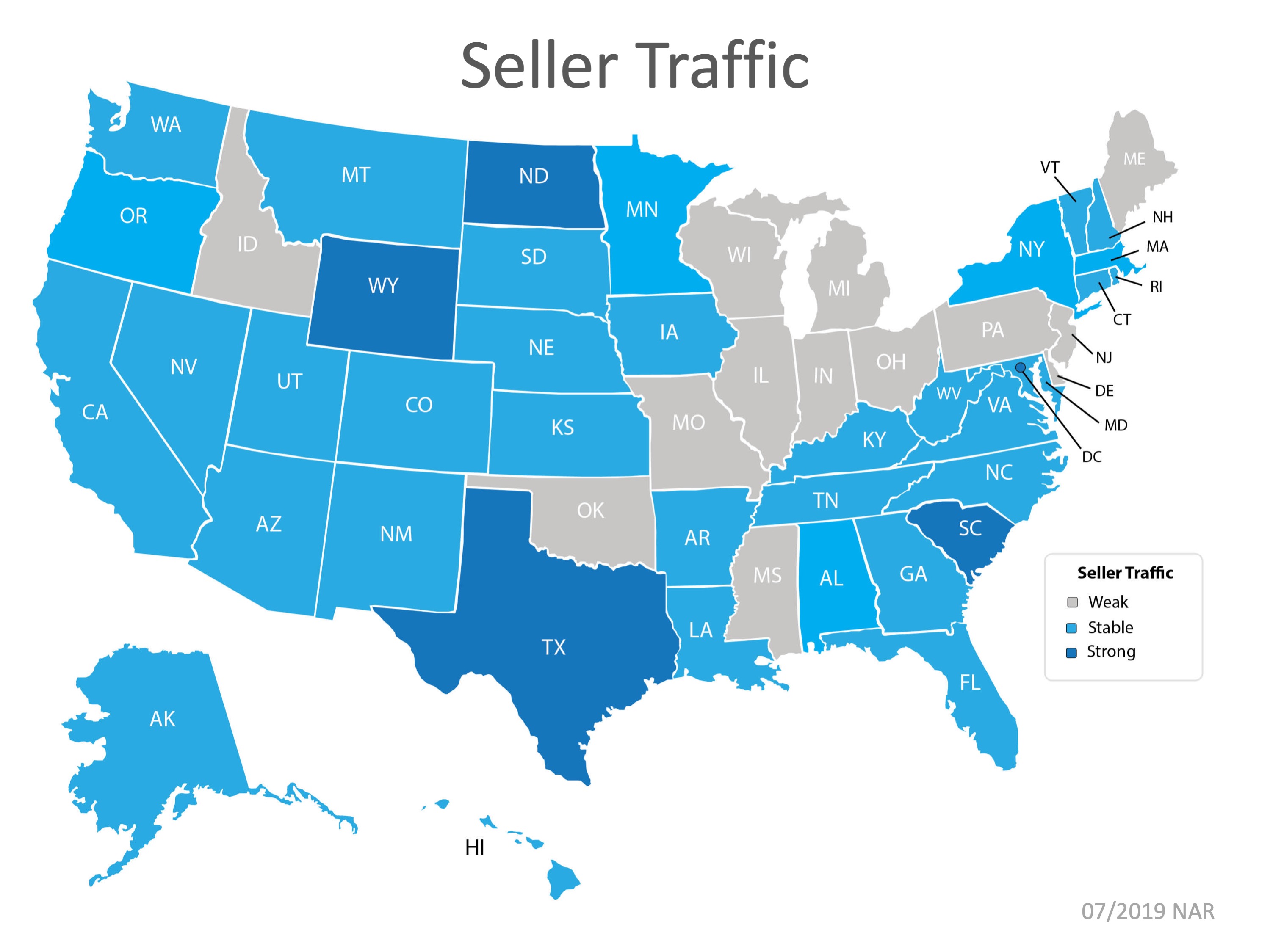
Inventory is on the rise, but there’s still an overall shortage of houses for sale (less than a 6-month supply found in a more normal market), so homes are going under contract quickly. In fact, the National Association of Realtors (NAR) Realtors® Confidence Index Survey reports that right now homes are only staying on the market for an average of 27 days. That’s less than one month, an even more accelerated pace from the 36-day trend we saw last spring.Why Now Is the Perfect Time to Sell Your House | Simplifying The MarketThe same report also indicates there are more interested buyers than active sellers today, which is one of the big factors driving home prices higher.Why Now Is the Perfect Time to Sell Your House | Simplifying The Market
Why Now Is the Perfect Time to Sell Your House | Simplifying The Market
This power combination provides an ideal environment for sellers aiming to close a quick sale and earn a big return as we wrap up the summer season.

Bottom Line

There’s still time to make a move before the school year starts and the fall weather sets in. Maybe it’s time to make a change. Let’s get together to determine if selling now is the right decision for your family.

Pin It on Pinterest