3 Must-Do’s for First-Time Home Buyers

3 Must-Do’s for First-Time Home Buyers

3 Must-Do’s for First-Time Home Buyers Simplifying The Market

Buying your first home is exciting, but it can also be a little nerve-wrecking because it’s something you’ve never done before. And trying to think of everything you need to do can feel like a lot. But here’s the key.

You don’t have to figure everything out on your own. And you don’t have to do it all at once. Just tackle it one thing at a time.

Here’s a simple list of 3 main things you should focus on to help you get started.

1. Assemble Your Team: Don’t Do This Alone

Buying a home is a team sport. And having the right professionals by your side can make a world of difference. Here’s who you need to find: 

  • A local real estate agent is your guide from the first showing to closing day. They’ll make sure you understand all the details along the way, so you feel confident in your decision.
  • A trusted lender will walk you through loan options, monthly payments, and what’s realistic for your situation. That information is something you’re going to want early on.

2. Prep Your Finances: Set the Foundation First

This is what determines what you can afford, how competitive you’ll be, and how confident you’ll feel when it’s time to make an offer. Here’s how to get ready: 

  • Check your credit score. Your credit score impacts the loan options you’ll qualify for and even the mortgage rate you’ll get. Knowing this number early gives you time to work on raising your score, if you want to.
  • Save for your down payment and closing costs. Most buyers focus on the down payment, but closing costs matter too. Having savings set aside for both helps you avoid last-minute stress and surprises.
  • Look into assistance programs. Many first-time buyers qualify for programs that’ll give their homebuying savings a boost. This can make buying possible sooner than you expect.
  • Talk to a lender about mortgage options. Fixed-rate, adjustable-rate, FHA, VA, and conventional loans all work differently. Understanding the options helps you choose what fits your goals best.
  • Get pre-approved. A pre-approval tells you what a lender would be willing to give you for your home loan. This’ll help you figure out your price range and set you up to move fast when the right home comes along.
  • Figure out your budget. Your mortgage is just one part of homeownership. Budgeting for your utilities, home insurance, and everyday expenses and maintenance will help make sure your payment feels comfortable, not stressful.

3. Gather Your Documents: Save Time (and Stress)

When you’re officially ready to kick off the buying process, lenders are going to need to verify your income, assets, and financial history. Having these documents ready-to-go upfront can speed up the process and reduce back-and-forth. Here’s what Bankrate says you need to prep:

  • W-2s and tax documents (past 2 years). These show income stability and help lenders verify your earnings over time.
  • Recent pay stubs (generally the past 1–2 months). Pay stubs confirm your current income and employment status.
  • Bank statements (past 2–3 months). These show your savings, spending patterns, and where your down payment funds are coming from.
  • Investment account statements (past 2-3 months). If you’re using investments as part of your financial picture, lenders may ask for these as well.
  • Copy of your driver’s license. This verifies your identity and is required for loan processing.
  • Residential history (past 2 years). Lenders use this to confirm stability and background information.
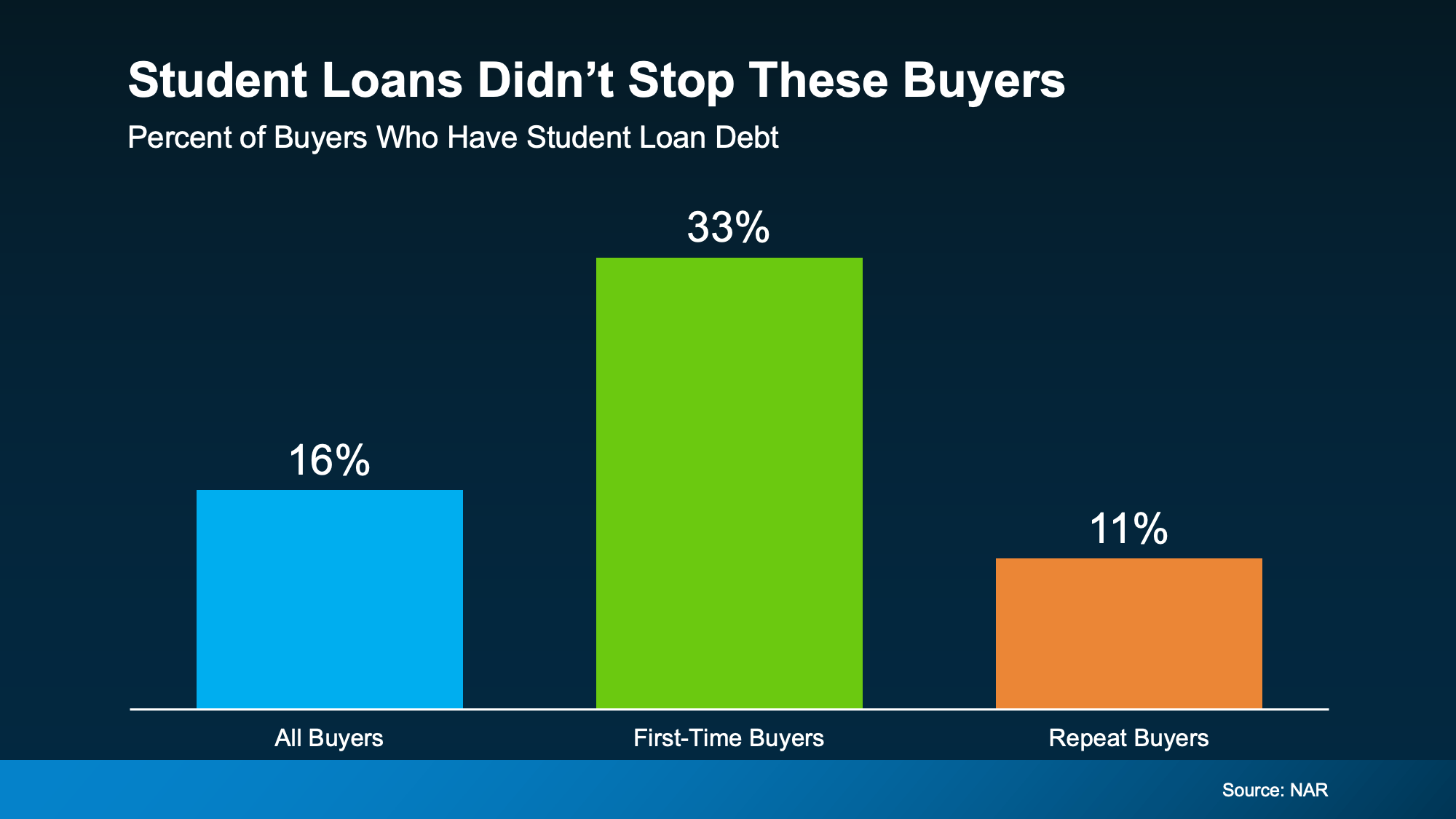
  • Statements for any outstanding debts (past 2 months). Student loans, auto loans, and credit cards affect your debt-to-income ratio, so lenders will want to know about them.
  • Proof of supplemental income. Bonuses, commissions, side work, or child support may count toward your income if documented properly.

Note: the exact time frames and list of documents may vary lender to lender. This is just a general rule of thumb to help you get the ball rolling.

Bottom Line

Buying your first home doesn’t mean you have to have everything figured out. It just requires a plan.

If you start with your finances, organize your documents, and surround yourself with the right people, you’ll be in great shape when the time comes to make a move.

And if you want more information on anything in this list or just need help getting started, reach out to an agent.

Should You Wait for Lower Rates?

Should You Wait for Lower Rates?

Should You Wait for Lower Rates? Simplifying The Market

Mortgage rates have already dropped into the upper 5s twice this year. But after just a few days, they ticked back up into the low 6% range. If you saw that and thought, “Great. I missed it,” you’re not the only one.

A lot of buyers are treating the 5s like some kind of magic number. As if moving from 6.1% to 5.99% suddenly changes everything. And from a mindset perspective, it does feel different.

But here’s the part most people don’t actually run the math on.

The Payment Difference Isn’t What You Think

Let’s say you’re looking at a $500,000 home loan. At 6.1%, generally speaking, your principal and interest payment is roughly $3,030 per month. At 5.9%, it’s about $2,966 per month.

That’s a difference of only $64 a month.

Not $300.

Not $500.

Sixty dollars.

Let that sink in for just a moment.

a blue and green rectangular box with white textYes, over time that $64 a month can add up. But it’s far from the dramatic swing many buyers imagine when they say they’re “waiting for the 5s.”

The psychological impact of seeing a 5 in front of your rate can feel big. The financial impact? It might be something you don’t even notice when it’s all said and done.

Experts Aren’t Predicting a Big Drop

Another important piece to think about: most housing economists aren’t forecasting a long-term return to 5% territory anytime soon.

While rates will move up and down, likely hitting the high 5s here and there, the broader expectation is for mortgage rates to hover in the low 6% range this year, not stay in the 5’s or decline much more.

a graph with numbers and linesWhile it certainly could happen, the reality is, waiting for a deep drop may not deliver the payoff you’re hoping for, if you’re holding out

The Bigger Question to Ask

Instead of asking, “Did I miss the 5s?” A better question is: “Does today’s payment work for me?” 

If the monthly payment fits comfortably in your budget, and you’ve found a home that meets your needs, the difference between 6.1% and 5.9% likely isn’t the deciding factor. It might be one of them, but it shouldn’t be everything. 

And remember, mortgage rates aren’t permanent. If they drop meaningfully later, refinancing is always an option. But you can’t refinance a home you didn’t buy.

Waiting Might Feel Safe, But It Isn’t Always Strategic

It’s natural to want the best possible rate. Everyone does. But sometimes buyers overestimate how much a rate in the high 5s will change things in today’s market.

Don’t miss the fact that rates have already come down. A year ago, they were in the 7s. Now? They’re hovering in the low 6s. And for a lot of people, that percentage point difference that’s already here is the real game changer.

If you paused your plans when rates were higher, now may be the right time to re-run your numbers. Not because rates are “perfect.” But because the monthly payment math might work better than you think, even with rates in the low 6s. 

Before assuming you’ve missed your moment, take another look at the numbers.

You may find it never disappeared.

Bottom Line

If you’ve been sitting on the sidelines waiting for that magic five number for rates, that strategy may not pay off as much as you’d expect.

Connect with an agent or lender so you can double check the math at your price point. You may realize payments are already within your range.

Why Townhomes Are Popular with Today’s First-Time Buyers

Why Townhomes Are Popular with Today’s First-Time Buyers

Why Townhomes Are Popular with Today’s First-Time Buyers Simplifying The Market

Buying your first home can feel frustrating when the numbers don’t line up the way you expected. You may know you’re ready but finding something that fits your life and your budget is the hard part.

That’s where townhomes come in.

Townhomes are becoming a bigger part of today’s housing supply, and that shift is opening doors for first-time buyers in a way we haven’t seen in years. That’s because they offer a more realistic path to step into homeownership without stretching yourself too thin, especially in a market where affordability can still feel tight.

There Are More Townhomes To Choose From

Builders are building more townhomes than they have in decades. In fact, when you look at data from the National Association of Home Builders (NAHB), nearly 1 in 5 new single-family homes being built today is a townhome. That’s the highest share on record (see graph below):

a graph of a number of houses

To put that in perspective, just a decade ago, townhomes made up closer to 1 in 10 new construction homes.

That gives today’s buyers far more townhome options than they had in the past. And that’s a really good thing.

Townhomes are one of the best ways for first-time buyers to finally get their foot in the door. And seeing that there’s more available for sale means one thing: you may have more opportunity to break into the market than you think.

Here’s why they’re such a popular choice for buyers like you.

Townhomes Tend To Be More Affordable

While prices vary by market, Redfin data shows townhomes are typically priced lower than detached single-family homes nationally. And that gap has grown in recent years as the supply of this type of home has grown too (see graph below):

a graph of a number of housesThere are two main reasons you may find a better deal on a townhome today. 

Reason #1: Size 

Townhomes are usually smaller by design. Most modern townhomes fall in the 1,300–1,500 square foot range, which helps keep prices, and monthly payments, lower. Basically, it works like this. Since they usually have a smaller footprint, they’re cheaper to build, and that makes them less expensive to buy, too. Ali Wolf, Chief Economist at NewHomeSource, explains how this helps buyers:

With the high cost of housing across the country, townhomes have emerged as a vital, more accessible entry point into homeownership. They are often priced lower than detached houses, offering buyers – especially first-timers, young professionals, and those downsizing – the chance to build equity without breaking the bank.”

Reason #2: Builder Motivation

And here’s another thing working in your favor. With more inventory than in recent years, homebuilders are motivated to sell what they’ve already built.

So, many may be more willing to negotiate, whether that means price flexibility, closing cost help, or potentially throwing in upgrades. According to the National Association of Realtors (NAR):

. . . home builders say they’re ready to attract more first-time home buyers. They’re responding to affordability pressures through lower cost homes and builder incentives. About 40% of builders cut prices on newly built homes at the end of last year . . . Roughly two-thirds of builders also offered additional incentives, like mortgage rate buydowns.”

Bottom Line

If buying your first home feels just out of reach, the right option might not be a different timeline. It might be a different type of home.

If you want to talk through whether a townhome makes sense for you or see what’s available in your area, connect with a local real estate agent.

It’s Getting More Affordable To Buy a Home

It’s Getting More Affordable To Buy a Home

It’s Getting More Affordable To Buy a Home Simplifying The Market

There’s finally a little good news for anyone who’s been priced out or sitting on the sidelines.

Buying a home is getting more affordable.

Monthly payments have started to come down, and the squeeze buyers have been feeling for the past few years is slowly loosening. Now, that doesn’t mean everyone can suddenly afford a home, but with how tough the market’s been, the improvement we’re seeing matters.

Affordability Is Finally Moving in the Right Direction

One of the best ways to see this shift is by looking at how much of a household’s income it takes to buy a home.

According to Zillow, housing is typically considered affordable when it takes 30% or less of your monthly income to cover your expenses. That includes your mortgage payment, taxes, insurance, and basic maintenance.

For the past few years, the math was well above that threshold, and it made buying a home unachievable for many. But now, we’re slowly moving back toward a balance. Zillow research shows it’s taking less of a typical household’s income to buy a home than it did just a few years ago (see graph below):

a graph with green line and white textNow, we’re not all the way back to Zillow’s threshold of 30% of your income or less, so affordability is still tight. But things are trending in the right direction.

Why Affordability Is Improving

So, what’s driving the change? A lot of the focus lately has been on mortgage rates and how much they’ve come down over the course of the past year. But that’s not the only factor working in favor of buyers right now. Here are three trends benefiting buyers today: 

1. Mortgage rates have eased. Rates are near their lowest level in more than three years, which helps lower monthly payments (see graph below):

a graph of a low interest rate

2. Home price growth has cooled. Prices aren’t falling nationally, but they’re growing much more slowly than they were a few years ago. That means buyers today aren’t facing the same sharp jumps in purchase prices, which helps keep monthly payments more manageable – and buying more predictable. 

3. Wages are growing faster than home prices. This one matters a lot. As Mark Fleming, Chief Economist at First American, explains:

When income growth exceeds house price growth, house-buying power improves—even if mortgage rates don’t decline meaningfully.”

None of this makes buying cheap, but it does explain why the math is starting to work a little better for buyers than it did even a just a year ago. Put simply, the forces that hurt affordability over the past few years are finally easing. Fleming again explains it well:

Affordability remains challenging, but for the first time in several years, the underlying forces are finally aligned toward gradual improvement. Mortgage rates may drift down only slowly, but income growth exceeding house price appreciation will provide a boost to house-buying power — even in a higher-rate world. Affordability won’t snap back overnight, but like a ship finally catching a steady tailwind, it’s now sailing in the right direction.

These three factors combined are why economists expect affordability to keep improving in 2026.

Where Homes Are Becoming Affordable First

But how much is affordability really going to improve? In some places, noticeably. Zillow says some markets are expected to fall back under their affordability threshold (30% of your income or less) by the end of the year:

a graph of the average homeowners

But that doesn’t mean you have to be in one of these markets or wait until year-end to buy. Other places are already seeing big improvements in affordability. So, talk to a local agent about what’s happening in your market. You may find you’re able to buy after all.

Bottom Line

For the first time in quite a whole, affordability is easing. That’s a meaningful shift.

And because this improvement isn’t happening everywhere at the same speed, understanding what’s changing locally is what really makes a difference. If you want to see how these trends show up in your area, talk with a local real estate agent.

Home Insurance Costs Are Rising: What Buyers Should Plan For

Home Insurance Costs Are Rising: What Buyers Should Plan For

Home Insurance Costs Are Rising: What Buyers Should Plan For Simplifying The Market

Buying a home is one of the biggest purchases you’ll ever make. And homeowner’s insurance is what protects that investment. Think of it as your safety net. NerdWallet explains it:

  • Covers Repairs and Rebuilding Costs: If your home is damaged by fire, storms, or other covered events, it helps pay for repairs and possibly even a full rebuild, if that’s deemed necessary.
  • Protects Your Belongings: It can also cover personal items like furniture, electronics, jewelry, and clothing if they’re stolen or damaged.
  • Provides Liability Coverage: And, if someone gets injured on your property, your policy can help cover medical bills or legal expenses.

But that peace of mind does come with a cost, and lately those costs have been rising.

Why Home Insurance Premiums Are Going Up

There are a number of factors causing insurance premiums to rise today. But, in the simplest sense, here’s what’s driving prices up according to the Insurance Research Council (IRC).

Severe weather events and natural disasters are happening increasingly often, leading to more claims. At the same time, homebuilding materials and labor are more expensive. So, when it comes time to work on those claims, insurers have to manage higher costs to repair or rebuild the affected homes.

That combination adds up to higher premiums. You can see how it’s climbed recently in the graph below. Each bar marks the percentage increase in insurance costs for that calendar year.

a graph of a graph showing the cost of homeowner insuranceThe good news is, the annual pace of the increase may be starting to ease according to ResiClub and Cotality. By their count:

  • In 2023 and 2024, insurance costs went up 14% a year.
  • In 2025, they rose about 10%.
  • And in 2026 and 2027, it’s expected to go up about 8% each year.

That’s still an increase, but at least the pace is slowing down. And here’s another silver lining.

While insurance costs are rising, mortgage rates are falling. And that can help offset some of this expense. As Michael Gaines, Senior VP of Capital Markets, Cardinal Financial, explains:

Rising taxes and insurance do create pressure, but they don’t erase the benefits of a lower rate . . . A small rate improvement, paired with the right loan program and smart planning, can still make homeownership possible . . . It’s less about one factor canceling another out, and more about helping buyers layer the right solutions together.”

Costs Are Going To Be Different Depending on Where You Buy

So how much do you need to budget for this? It depends on the price point and location of house, the coverage you need, and more. And just like with everything else in real estate, costs vary by area.

You can get a rough idea of your state’s typical premiums in the map below:

So, What Can You Do About It?

Generally speaking, your first insurance payment will be wrapped into your closing costs. But after that, it’ll become a recurring expense. That’s why knowing these premiums are rising is so important. It helps you factor that into your budget, so you go in with a full picture of what you can comfortably afford.

If you’re crunching the numbers and trying to find other ways to save, here are a few tips from Insurify and NerdWallet that can help you get the best insurance price possible:

  • Shop Around – Compare quotes from multiple companies.
  • Bundle Policies – Combine home and auto for discounts.
  • Ask About Discounts – Don’t miss out on savings you may qualify for.
  • Highlight Upgrades – Features like a new roof or storm windows can cut costs.
  • Improve Your Credit – A stronger credit score can mean better premiums.

Bottom Line

If you’re thinking about buying a home, don’t forget to plan ahead for your homeowner’s insurance.

While costs are rising, knowing what to expect and how to shop around can make a big difference as you’re budgeting for your purchase. Because this isn’t coverage you’ll want to skimp on. It’s your best protection for what’s likely your biggest investment.

Pin It on Pinterest